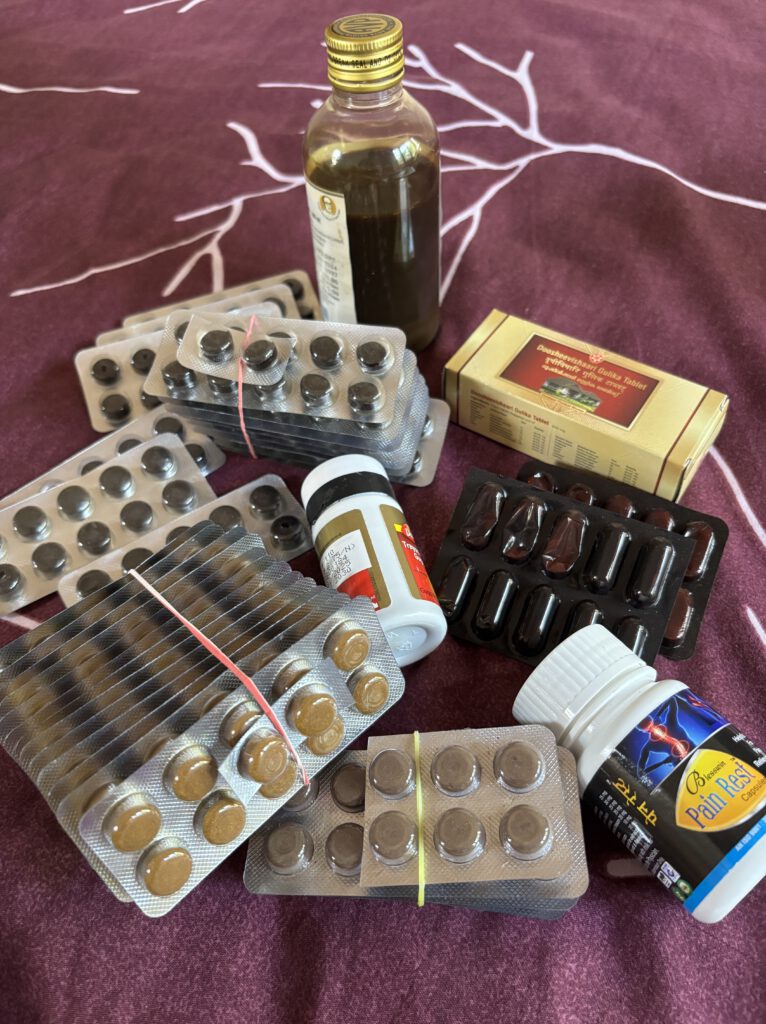
Ayurveda, the ancient Indian system of healing, is known for its natural, holistic approach. It prides itself on individualized care and personalized treatment. In theory, it’s beautiful. In practice? My lived experience says otherwise.
This is not just a passing critique. This is a dire appeal. Ayurveda industry, it’s time to wake up, shape up, and step into the 21st century.
The Promise That Fizzled
In 2018, I began seeing a petite, spiritually-oriented Ayurvedic doctor in Bangalore. I had a slightly elevated blood sugar level—nothing alarming to my allopathic doctor, but enough for me to want to act early. Ayurveda felt like a wise, natural place to turn.
To the doctor’s credit, within six weeks my sugar level dropped from 180 to 130. A significant improvement. I was new to diabetes and didn’t quite understand the significance of those numbers back then— it was normal.
Then came the constant changes. Every six weeks, my medication protocol shifted—sometimes drastically. Each visit meant a long wait for the in-house pharmacy to prepare the medicines, often as long as the appointment itself. And there was no provision for delivery or remote care. When COVID hit, the system crumbled. No home delivery, no tele-consults, no plan B. I had no choice but to stop.
The Illusion of Structure
Fast forward to 2021. I moved to Coimbatore and started treatment with another highly reputed doctor at a major Ayurvedic institute. On paper, it looked ideal—an established name, professional setup, claims of online consultations. In reality? The doctor may have had the knowledge, but the surrounding structure was a mess.
While the doctor himself seems knowledgeable, the system surrounding him was anything but. The staff lacked basic familiarity with Ayurveda. Communication was vague, uncoordinated, and at times dismissive.
Despite posters promising online consultations and home delivered medications, nothing was ever followed through. As I relocated again, continuing the remote doctor-patient relationship became impossible.
Most shockingly, the clinic itself felt cold and clinical—sterile in the wrong way. Where was the warmth, the grounding, the attentive care Ayurveda is supposed to embody?
A Modern-Day Maze of Medicines
One of the most exhausting aspects of modern Ayurvedic care is the sheer volume and timing of medicines. There’s a powder before breakfast, a liquid mix mid-morning, a tablet after lunch, another oil at sunset, a different mix before bed. You’re juggling 6, 8, even 10 different formulations daily. And they keep changing!

I’ve gone through countless pillboxes trying to organize these, and only just now found one that’s barely manageable. The bottles are bulky and messy, and completely inconvenient for travel. It’s as if the Ayurveda industry assumes we live in the 1500s: no work pressure, no travel, an extended family to take care of us while we “rest and rejuvenate.” That is simply not reality.
We live in a fast-moving, hyper-connected world. Our nervous systems are already overstimulated. If Ayurveda continues to bombard us with too many medications, changing them frequently with no clear explanation, it just replicates the overload and confusion of the digital world. It doesn’t heal: it entraps.

The Breaking Point
Ten days ago, I ran out of the Ayurvedic medicines I’d been prescribed. I didn’t have time to get a refill. I wasn’t eating particularly well, wasn’t exercising much either because of personal factors. But guess what? My blood sugar stabilized. My body found its own rhythm again. (Perhaps it is finally time, and the Goddess is releasing me from my bodily discomforts! That’s a story for another day.)
Yes, our bodies are intelligent. Yes, healing is nonlinear. But it also points to the fact that rigid dependency on an inconsistent medical system may not be worth the toll. But this experience also revealed how dependent and disoriented these long protocols had made me feel. Without transparency, without support, the “natural path” begins to feel unnatural.
Yes, our bodies are mysterious and adaptable.
As if that weren’t enough, I’ve also been waiting over two months for leech therapy for an autoimmune condition that has caused swelling in my knee. Every time I ask, there’s a vague answer: “the season isn’t right,” “we don’t have stock,” “we’ll let you know.” If the treatment isn’t available or practical to offer, why mention it at all?
A Loving Call to Evolve
Let me be clear: I believe in Ayurveda. I’ve seen its brilliance. I’ve studied its texts. I’ve met its sincere practitioners. Belief doesn’t excuse dysfunction.
I know it holds deep healing potential. Reverence does not mean blind acceptance. Reverence doesn’t justify delay, disorganization, or opacity. The infrastructure, communication, and patient experience must match the depth of the knowledge.
Ayurveda professionals and institutions: please, hear this as a loving call to reform. Patients today are discerning. We want care that is rooted in wisdom and delivered with modern efficiency. We want transparency, reliable systems, digital access, and respect for our time and wellbeing.
Ayurveda must evolve. It must develop delivery systems, digitized follow-ups, pillbox-friendly formulations, clear communication, and patient education. Train your staff. Organize your prescriptions. Consider modern realities. You cannot expect 21st-century people to live like they’re in a 15th-century village community. We are all bombarded with change and more and more marketing on social media. Don’t be another constant change in our lives. Be a steady rock we can count on for support.
Ayurveda, we need you. To be ancient and agile. Wise and workable.
So please, for the sake of all who still believe in your promise, shape up.