Pongal, a harvest festival, is celebrated across Tamil Nadu and by ethnically Tamil people, for several days. It marks the end of the winter season, and the last harvest of year (considering the new year starts mid-April in this region).
The festival starts with Bhogi, a day to get rid of old rubbish and old things. On Pongal day, farmers harvest haldi (manjal/ turmeric), sugar cane, and
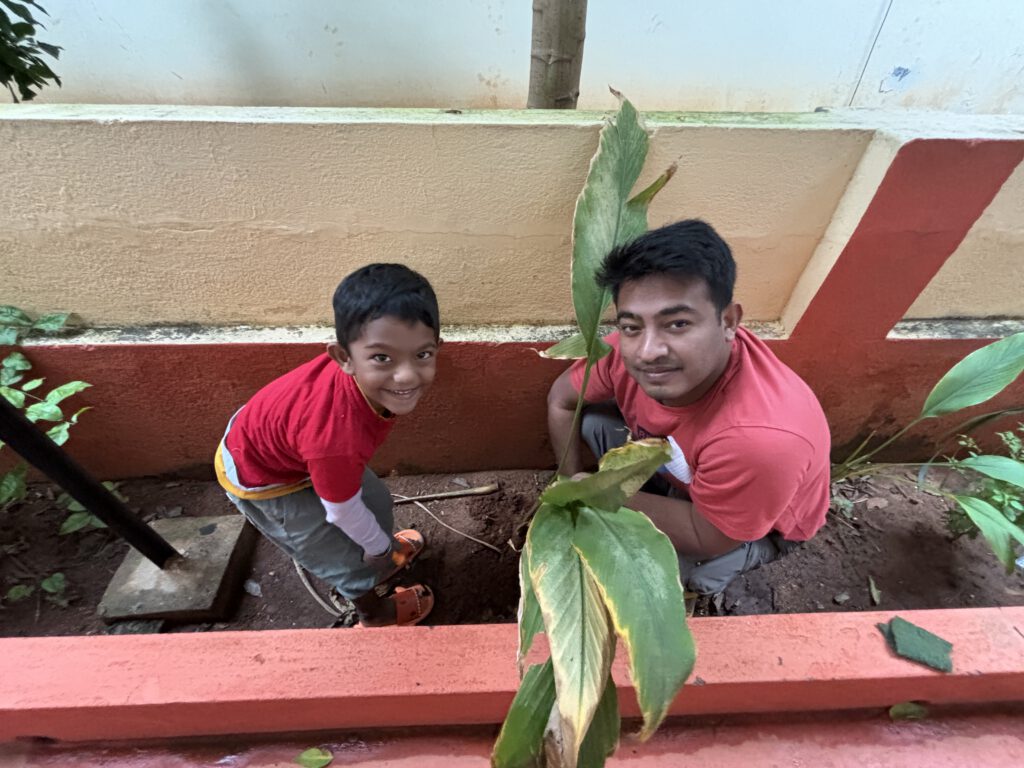
Today, my family and I also harvested haldi, and decorated the gates of the house with our bounty.


Pongal is also a time to celebrate Maadu, the cows who give us bountiful health. In villages, cows are also bathed and dressed up, and people enjoy bullock cart rides as a fun entertainment.


We also were entertained by a dance troupe from the locality, whose energy was unmatchable for nearly 1 hour. They showed us the kummudi style of dancing, and we even got a chance to join in the party!
Pongal is a story of security: the harvest is a measure of how successful a family is, how much strength and security they have for the coming year. This story, which I wrote in 2010, describes how people used to view security in this region.
Arise, oh little ones! The sun will be up soon. And today marks the beginning of a new season. Come now, my dear ones, gather round the hearth, made of an earthen pot upon a brick hearth under a teepee of sugar cane stalks. We shall cook a scrumptious meal now for Pongal! O PONGAL! Warm and hearty, we make Venpongal salty and spicy with pepper, lentils, and cumin seeds; rich and delightful, we make Sakkaraipongal sweet with cardammon, cashews, raisins, and milk.
We watch as these spill over upon the earth underneath, signifying a bountiful harvest, a wealth unparalleled, with the grace of the sun, the great God of the sky, in association with the earth, the wind, and the rain.
Cry out, “Pongal o Pongal!” We will feed the laborers and their children. All will be well. We will be secure for the coming months, provided for by the gods who gave us the rains and the harvest. We have the ability to give, so we know we can be happy and secure in our position.
Imagine if you will, a palace with no equal: rising high into the sky, with gold trim and vivid silk cloths being carried by the gentle winds. Imagine guards gazing out from the gate and towers, keeping safe the people who keep the people safe. Imagine the tinkling sounds of laughter echoing from the marketplace, from women who gaily traverse through the streets in search of the simplicities of life.
Imagine a system that works peacefully, keeping intruders out without force, yet welcoming outsiders with openness, allowing space for change through positive growth. Indeed, Tamil Nadu kingdoms were known for passively resisting occupation.
Imagine the royal family, humbly bowing to the priestly advisors on the backdrop of the mountain in the middle of the lake, atop which the temple of Vinayaka sits. The king prays for a peaceful time, with no battles; he merely wants to secure his land. The queen wants nothing disastrous to happen, so she prays to the Pillayaar to remove any negativity, any natural crises: droughts, famines, disease.
Below, a bird’s home is nestled amongst the branches of the banyan tree, upon which young women tie colorful scraps of cotton with bangles: they pray for a child to be born, for that brings them a position in the family that is secure. The child further allows the family name to be continued throughout time, ensuring a place in history, securing someone to propitiate the Gods for the ancestors.
This is the Paadhukaappu of Pongal.


Banana leaf style meal.